

What It Is
A stabilizer's job is to sense roll before humans, feel it and cancel it with an equal and opposite force. Modern systems do this thousands of times per hour: Gyro sensors read the hull's motion, a control computer calculates the correction, and actuators — fins, rotors, interceptors or transom blades — apply it within fractions of a second. The decisive advance of the last two decades is zero-speed capability, which keeps a yacht steady not only under way but at anchor, where guests actually spend most of their time.
The Technology Landscape
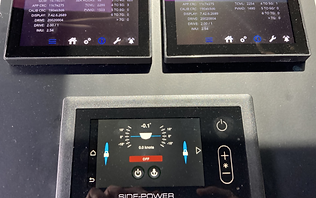
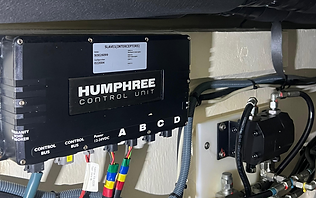
Fin stabilizers remain the superyacht standard: hydraulic systems from names like Humphree, Sleipner, CMC Marine, Naiad Dynamics, Quantum Marine, ABT-TRAC, Matn's Stabilizers, Kongsberg Maritime and Mitsubishi Heavy Industries, and the newer generation of electrical actuated fin systems and curved Vector fins quieter, cleaner and more precise, with no hydraulic plant to maintain. Interceptor and trim systems such as Humphree's use fast-moving vertical blades at the transom to control trim, list, pitch and roll at speed with minimal drag. Gyroscopic stabilizers take a different path entirely: a flywheel spinning in a vacuum sphere produces righting torque with no appendages outside the hull, attractive for smaller yachts and sport fishers. Around all of them sits an ecosystem of controls and components from specialists like Kobelt, Praxis Automation and SKF. BRAVO YACHT SERVICES services and installs the full spectrum of fins, interceptors and trim tabs.
Why Maintenance Matters
A stabilizer is a precision machine whose most critical parts live below the waterline. Every fin shaft is a hull penetration whose seals age toward failure; shaft bearings wear until fins develop play the control system must fight; hydraulic plants depend on clean fluid, healthy pumps and correctly charged accumulators; and zero-speed operation means the system now works around the clock at anchor, multiplying duty hours. Control software and gyro sensors need updates and recalibration like any computer. The failure mode is rarely dramatic, a neglected system simply stabilizes less each month, and comfort erodes until someone finally asks why the boat rolls again. Scheduled seal and bearing service, fluid analysis, calibration, software updates and haul-out inspection of fins and shafts keep the system performing exactly as it did on delivery day.

The Difference You Feel On Board
For owners and guests, working stabilization means dinner served on a still table at anchor, children sleeping through a passage, and nobody quietly retreating to a cabin feeling sick. For crew, it means safer movement through the vessel, easier galley work and service, and the professional pride of a boat that rides beautifully in conditions that send others back to port. And for the captain, it means itinerary decisions driven by where the guests want to go, not by which anchorage the boat can tolerate.


