What It Is
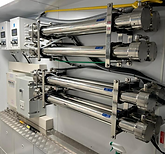
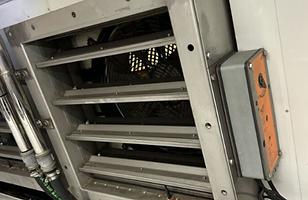
Marine ventilation is a complete respiratory system. Engine room supply blowers deliver the enormous volumes of air diesels need for combustion and cooling — a large engine can consume more air in an hour than the entire interior volume of the yacht. Exhaust fans carry away heat, moisture and fumes from machinery spaces, galleys, heads, laundries and garages. Bilge and compartment blowers purge fuel vapors before engine start. And distributed through the ductwork stand the fire dampers: spring-loaded or actuator-driven blades, held ready to slam shut and seal a compartment in seconds. Every component — axial and centrifugal fans, ducting, grilles, actuators, controls — is engineered to move air reliably in a salt atmosphere that attacks it constantly.

Vital & Essential: The Safety Role
Ventilation equipment is not comfort equipment; it is part of the vessel's fire and safety strategy. A fire in a machinery space is fought first with air: dampers close, fans stop, and the compartment is sealed so a fixed extinguishing system can do its work — none of which happens if a damper is seized with corrosion or an actuator has quietly died. This is why damper function tests are a standing item in class and flag surveys, and a seized damper is one of the most common findings. The same logic applies at smaller scale: a bilge blower that fails to purge vapors before start, or a galley extractor loaded with grease, is a fire waiting for permission. These devices exist for one day of their lives. Maintenance is what guarantees they work on that day.
Why Maintenance Matters
Ventilation faults hide in plain sight because degradation is gradual. A blower on worn bearings moves less air every month — engines run hotter and down on power, engine room temperatures creep up, and alternators and electronics pay the price in shortened life. Belts stretch, motor windings age, duct joints leak conditioned air into voids, and grease accumulates invisibly in galley extract runs. The remedy is a disciplined cycle: periodic function testing of every damper and actuator, bearing and belt service, airflow measurement against design values, duct and grille cleaning, and inspection of fan motors and controls. We work with the OEM brands and suppliers that lead this market segment — Swegon, ActionAir, Belimo, Liverani, Heinen & Hopman, FEIT and Halton — so repairs and replacements are done with the right components, not improvised ones.

The Difference You Feel On Board
Guests experience good ventilation as the absence of things: no diesel smell in the cockpit, no stuffy cabins, no galley odors drifting into the saloon, no whine of a failing fan behind a bulkhead. Owners experience it as engines that run cool, generators that last, and an engine room that doesn't bake its own equipment. And for captains, it is deeper than comfort: tested dampers and healthy airflow mean surveys passed without findings, insurance requirements met, and the quiet certainty that if the worst day comes, the vessel's fire response will work exactly as designed. That certainty underpins everything else that happens on board.